
Urgent Roof Problems Addressed Before Damage Spreads
Residential Emergency Roof Repair in Moline for active leaks, storm-displaced shingles, and roofing failures requiring immediate attention
Storm damage that leaves sections of a roof exposed doesn't wait for a convenient repair window—water that enters through missing shingles or torn flashing reaches insulation, framing, and drywall within hours, and the cost of the secondary damage typically exceeds the cost of the repair itself by a significant margin. Calderon Construction responds to emergency roofing situations in Moline where active intrusion or structural exposure requires immediate stabilization before a full repair assessment can be completed. The first priority in those situations is stopping water entry, not completing a permanent fix in a single visit.
Emergency repairs address the specific failure point rather than the condition of the overall system. A storm that strips shingles from one slope, for example, requires those sections to be re-secured and sealed against continued water entry—and the scope of that work depends on whether the underlayment beneath is still intact, whether the decking sustained impact damage, and whether flashing at adjacent edges was disturbed. Those decisions are made on-site based on what the damage actually looks like, not based on assumptions from a phone description.
Call to describe the damage you're seeing and arrange for an immediate assessment of what your roof requires to stop active water entry..
What Emergency Roof Repair Actually Accomplishes
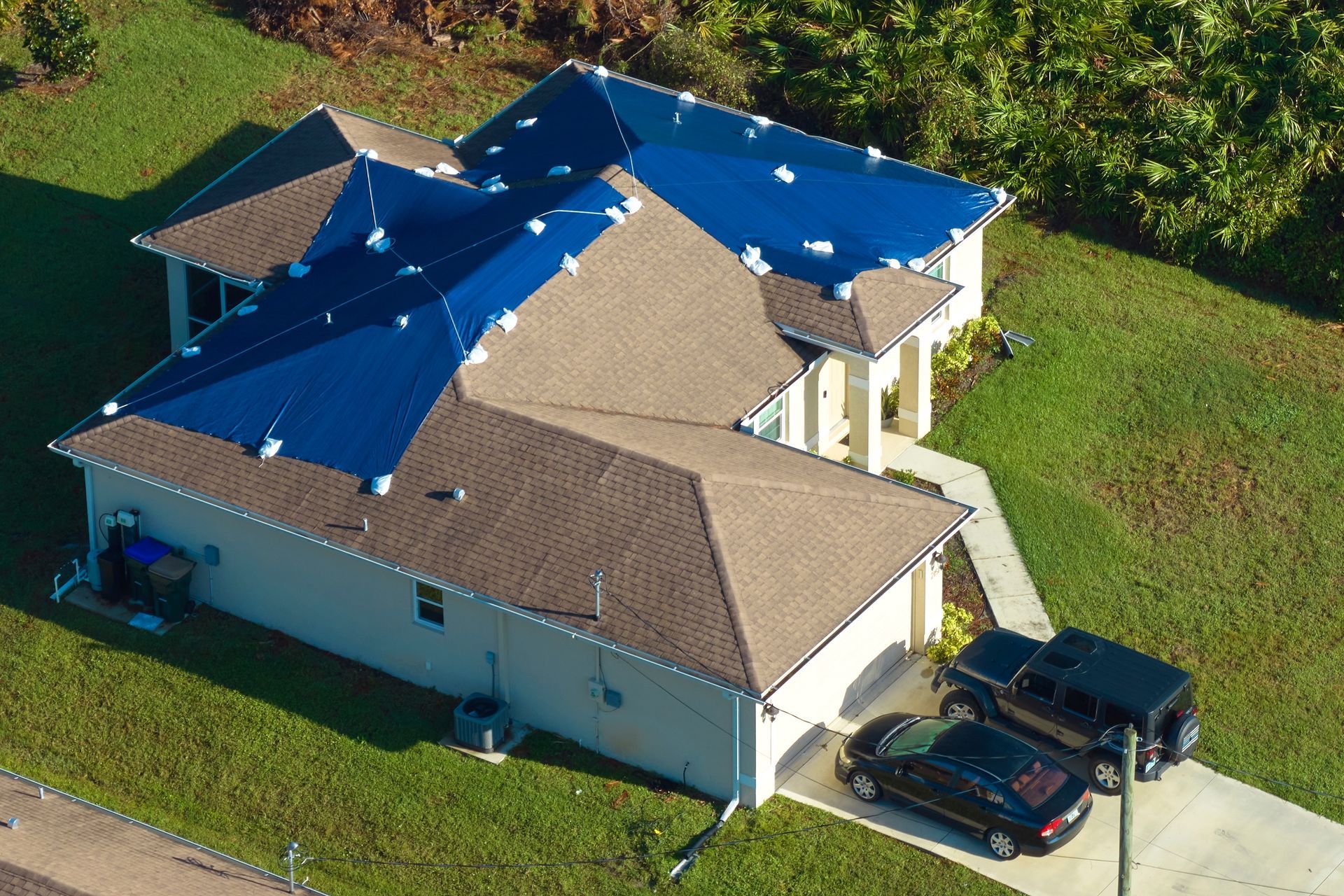
The distinction between an emergency repair and a permanent repair is important to understand before work begins. Emergency repair is designed to stop the active failure and protect the structure from further exposure while a full assessment is completed—it is not a substitute for addressing underlying issues with the overall roofing system. Temporary measures like tarping or partial sealing are used when damage is too extensive for same-day permanent repair, and those measures are installed to hold against continued weather rather than as a cosmetic fix.
After emergency repair work is completed, the immediate indicators of failure—water dripping into living spaces, visible daylight through the roof deck in the attic, or shingles missing from identifiable sections—are resolved. Calderon Construction documents the repair scope and the condition of adjacent areas so that when a full assessment follows, there's a clear picture of what was addressed on an emergency basis and what the broader system condition looks like. That documentation also matters if an insurance claim is involved, because it establishes what damage was present and what was done to prevent it from worsening.
Emergency repairs in Moline most commonly follow spring hail events, high-wind storms that lift shingle tabs or displace ridge cap, and ice dam-related failures along the eaves in late winter. Each of those damage types affects the roof differently—hail damage is often visible as bruising and granule loss that weakens shingles across a broad area, while wind damage tends to be localized to ridges, rakes, and areas where shingles were already beginning to lift. Identifying the mechanism of failure determines what repair approach is appropriate.
Questions Before Starting Your Emergency Repair
Homeowners dealing with an active leak or visible storm damage often have immediate questions about what happens next and what the repair process looks like. These answers reflect how emergency roof repairs typically work in Moline's weather environment.
What should I do inside the house while waiting for repairs?
Place containers to catch active drips and move furniture or valuables away from the affected area—if the ceiling is bulging from water accumulation, a small controlled puncture in the lowest point prevents the weight of pooled water from causing a larger ceiling collapse.
How is the repair scope determined when the damage isn't fully visible from the ground?
On-site inspection from the roof surface identifies the extent of shingle loss, whether the underlayment was breached, and the condition of decking beneath impact zones—those findings drive the repair plan rather than a ground-level assessment alone.
Why does storm damage in Moline sometimes affect areas that look undamaged?
Hail impact weakens the granule bond on shingles across the entire strike pattern, not just in visibly cracked areas, which means granule loss and early weathering can develop across a wider section than the obvious damage suggests.
What is the difference between a temporary repair and a permanent one?
Temporary repairs stabilize the immediate failure point to prevent continued water entry; permanent repairs restore the roofing system to its intended performance level and address any underlying causes of the failure.
When does emergency damage require a full roof replacement instead of repair?
When the damaged area covers a significant portion of the roof, when the decking beneath has absorbed substantial moisture, or when the existing shingles are already near end of life, replacement often becomes the more practical and cost-effective path than repairing into a system that won't hold long-term.
Calderon Construction can assess your roof's condition following storm damage and clarify exactly what repair work is needed to stop the current problem and what the longer-term system condition looks like. Arrange an inspection so you have a complete picture of the damage before decisions are made.
Contact Us for a FREE Estimate
Contact Us
We will get back to you as soon as possible.
Please try again later.