
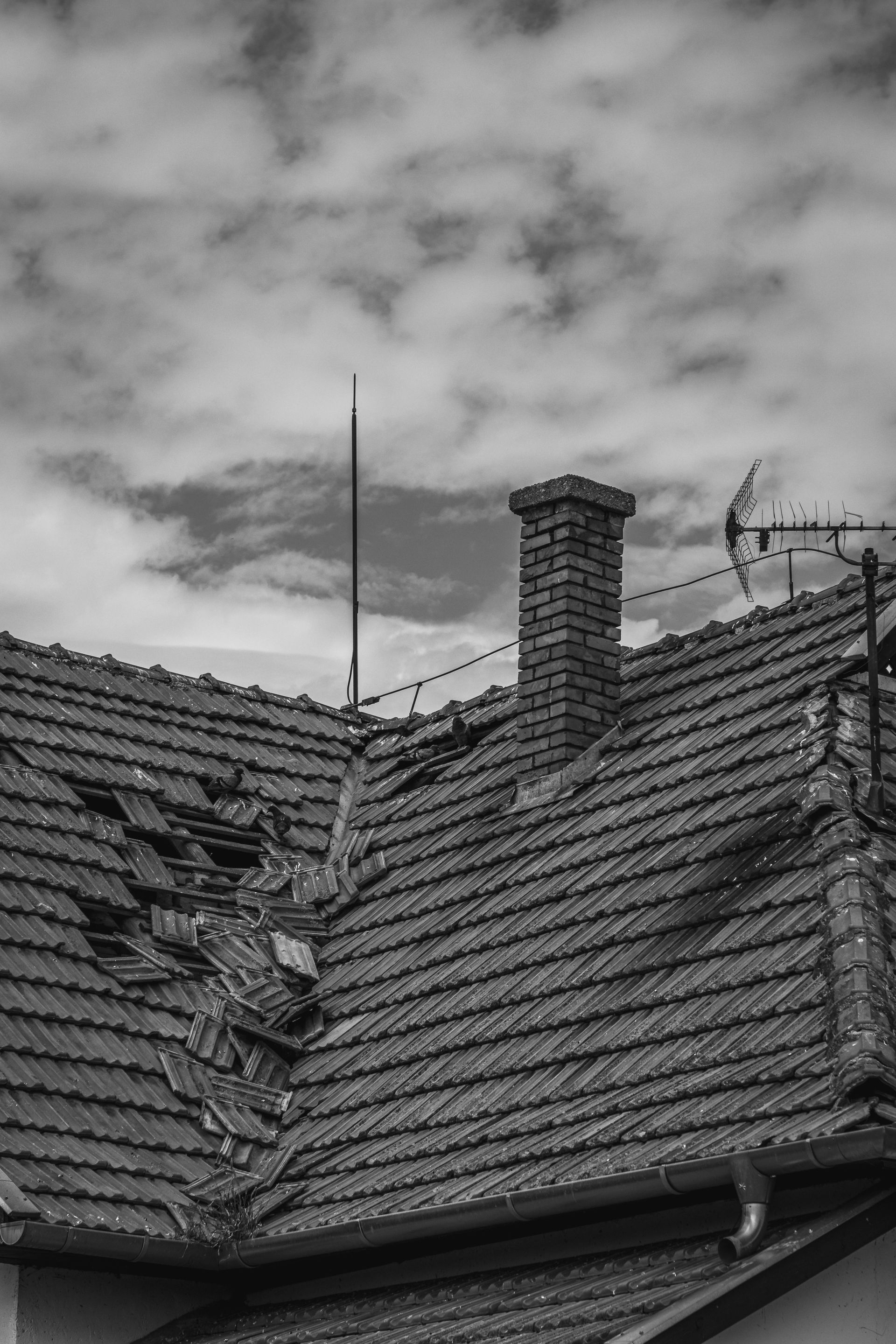
Missing Shingles Signal a Larger Roofing Problem
Residential Wind Damage Repair in Moline for missing shingles, displaced flashing, and loosened exterior materials
Wind damage repair on a residential roof involves more than replacing the shingles that are visibly absent—it requires identifying why those shingles failed and correcting the fastening or sealing conditions that allowed the failure to propagate. Calderon Construction provides residential wind damage repair in Moline, addressing missing and lifted shingles, displaced flashing, and loosened exterior materials across the full affected elevation. The work is scoped to address both what came off and what is still in place but no longer secured to perform correctly under load.
Strong wind events lift shingles at the adhesive strip first, breaking the thermal seal between courses before the fasteners are stressed. Once that seal is broken, the shingle can flex repeatedly in subsequent wind events, which gradually works the fastener loose and eventually allows full displacement. On Moline properties where original roofing was installed with four nails per shingle rather than the six-nail pattern required for high-wind zones, that failure sequence accelerates significantly—an important factor in determining the repair approach for homes that have had only one previous re-roof. Calderon Construction evaluates fastening patterns in the field before determining whether damaged sections are repaired in kind or whether a re-nailing of adjacent courses is warranted.
Set up a post-storm exterior review with Calderon Construction to assess which materials are missing, which are loosened, and which are still performing as installed.
Why the Repair Approach Varies by Damage Pattern
Wind damage does not distribute evenly across a roof—it concentrates at corners, ridges, and the leading edge of the prevailing wind elevation, which means the inspection must pay particular attention to rakes, hip returns, and the first several courses above the eave on exposed elevations. Flashing at wall-to-roof transitions and around dormers is also vulnerable, since wind pressure creates a suction effect at those geometry changes that can pull embedded flashing free even when the surrounding shingles remain in place. Each of those specific locations is checked independently because the repair required at a displaced ridge cap differs from what is needed at a lifted field shingle or a pulled wall flashing.
Once Calderon Construction completes wind damage repairs, exposed decking is covered, all courses lie flat with active adhesive strips engaged, and ridge and hip caps are fully fastened without any gaps at their overlaps. Exterior siding and soffit panels that were loosened by wind pressure are re-secured or replaced so that no panels rattle or flex under load—a condition that homeowners can verify by hand pressure along the repaired sections.
In some cases, wind events expose the condition of older caulking at penetrations and trim joints that had already begun to separate. Addressing those secondary openings during the primary repair prevents them from becoming independent leak sources after the main work is complete, and doing so in one visit is more efficient than returning to address moisture intrusion that was always present but obscured by the storm damage.
Questions Before Starting Your Project
The following questions address how wind damage is assessed and what the repair process involves on residential properties in this area.
How are shingles that are still in place but no longer sealed identified during inspection?
A trained inspector runs a hand along the underside of shingle tabs at the adhesive strip line; tabs that have lost their thermal seal flex freely rather than resisting upward pressure, indicating they are vulnerable to displacement in the next wind event even though they appear intact from above.
What is the correct fastening standard for shingles on homes in this region?
Standard installation in the Quad City area follows manufacturer specifications that typically require six fasteners per shingle in high-wind applications, placed within the nailing zone defined by the shingle's exposure; nails placed above that zone—a common shortcut—do not anchor the shingle against uplift effectively.
Why does wind damage often appear on only one or two sides of a roof?
Wind pressure acts directionally, so the elevation facing the storm bears the greatest uplift force while opposite elevations may show no visible damage at all; the inspection still covers the full roof because wind turbulence at ridges and corners can cause localized failure on any surface.
How does the construction era of Moline homes affect wind damage repair scope?
Homes built in the 1950s through 1970s in Moline frequently used three-tab shingles with limited factory sealant strips; when those original materials were covered by a second layer of shingles rather than stripped, wind events can lift both layers simultaneously and expose decking across a wider area than the surface damage initially suggests.
What exterior materials other than shingles commonly require attention after a wind event?
Soffit panels are frequently loosened or displaced as wind pressure builds under the eave overhang, and fascia-mounted gutter brackets can be pulled free, causing the gutter to sag or separate from the fascia entirely along the affected run.
Calderon Construction also performs residential wind damage repair in Davenport and across the broader Quad City area. To have your property's wind damage documented and repaired, contact Calderon Construction and describe the elevations and materials that appear affected.
Contact Us for a FREE Estimate
Contact Us
We will get back to you as soon as possible.
Please try again later.